How Is Wool Felt Supporting Innovation in Modern Textile Manufacturing?
Material Innovation and Changing Requirements in the Textile Industry
The textile industry is undergoing continuous changes as manufacturers explore new materials, improve production methods, and respond to increasingly diverse application requirements. Material performance has become an important consideration in textile processing, particularly in applications involving surface treatment, fabric finishing, and specialized machinery. Wool Felt remains a notable material in this field because of its natural fiber structure, flexibility, and ability to support different industrial processing requirements.
As textile manufacturing becomes more specialized, companies are paying closer attention to the relationship between material characteristics and processing equipment. The selection of suitable materials can influence production stability, finishing quality, and the consistency of the final output. This has encouraged manufacturers to evaluate traditional textile materials from a more technical perspective and explore their potential in modern industrial applications.
The development of textile machinery is also contributing to this transformation. Equipment manufacturers are improving mechanical structures, optimizing processing methods, and introducing specialized machines to accommodate different fabric characteristics. Material innovation and machinery development are therefore becoming closely connected elements of the industry's progress.
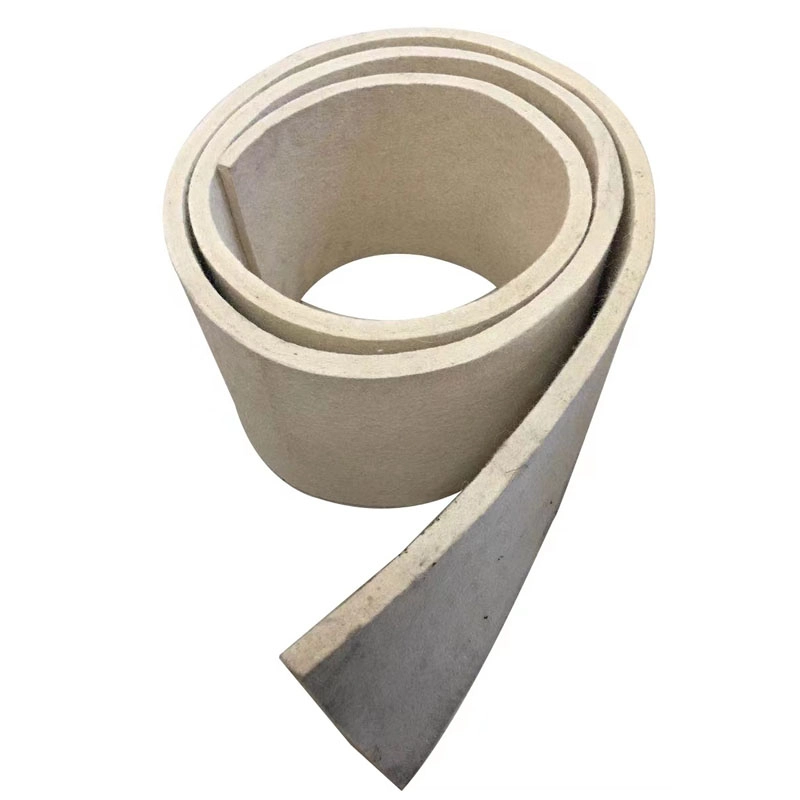
Understanding the Functional Characteristics of Wool-Based Materials
Natural Fiber Structure and Material Flexibility
Wool is a natural animal fiber with a distinctive structure. Its surface consists of overlapping scales, while the internal fiber structure provides natural elasticity and flexibility. These characteristics give wool-based materials a different performance profile compared with many synthetic alternatives.
When processed into felt, wool fibers are entangled through mechanical action, moisture, and controlled pressure. This process creates a compact textile structure without requiring conventional weaving or knitting. The resulting material can provide a combination of softness, resilience, and structural stability, depending on the fiber composition and manufacturing process.
These characteristics make felt materials suitable for applications where conventional woven fabrics may not provide the required functional properties. Their structure can be adjusted through different production methods to accommodate specific thickness, density, and surface requirements.
Absorption, Cushioning, and Surface Contact
The internal structure of felt creates spaces between interconnected fibers. These spaces contribute to its ability to absorb moisture and provide cushioning during contact with other surfaces. Such properties can be useful in applications involving material handling, protective layers, and selected finishing operations.
In textile-related manufacturing, surface contact is an important consideration. Materials used in brushing, polishing, and finishing processes need to interact with fabrics in a controlled manner. Their flexibility and surface structure may influence how pressure is distributed during processing.
However, the appropriate material depends on the intended application, equipment configuration, and required finishing result. Manufacturers should evaluate fiber composition, density, thickness, and surface characteristics before selecting a suitable material.
How Does Material Selection Influence Textile Processing?
Material selection affects more than the physical properties of the finished textile product. It also influences equipment settings, processing efficiency, maintenance requirements, and the stability of production operations. A material that performs well in one application may not necessarily provide the same results under different processing conditions.
Matching Material Properties with Equipment Requirements
Textile machinery is designed to perform specific operations, including brushing, shearing, cutting, raising, and surface finishing. Each operation involves different mechanical movements and contact conditions. Selecting compatible materials helps manufacturers establish more appropriate processing conditions.
Several characteristics should be considered during material evaluation:
- Fiber composition: Different fiber combinations influence softness, resilience, moisture absorption, and surface behavior.
- Material density: Density affects structural firmness and the way a material responds to mechanical pressure.
- Thickness: Thickness influences cushioning properties and compatibility with particular equipment structures.
- Surface texture: Surface characteristics determine how the material interacts with fabrics and other processed components.
- Dimensional stability: Consistent dimensions help maintain compatibility with machinery and production requirements.
Considering these factors allows manufacturers to make more informed material selections. It also helps reduce inconsistencies caused by unsuitable material specifications or mismatched equipment settings.
Improving Process Control and Finishing Consistency
Stable production depends on maintaining consistent operating conditions throughout the manufacturing process. Variations in material structure, surface contact, and mechanical pressure may influence the final finishing effect. For this reason, manufacturers increasingly emphasize process monitoring and material quality control.
A well-matched material can help support controlled contact during specific finishing operations. When combined with appropriate machinery settings, it may contribute to more uniform processing results and reduce unnecessary adjustments during production.
Manufacturers should also consider the condition of processing components over time. Wear, contamination, and changes in material structure can affect performance. Regular inspection and timely maintenance are important for keeping production conditions stable.
Industrial Applications and Material Selection Considerations
The application of wool-based felt extends beyond conventional textile manufacturing. Its combination of flexibility, compact structure, and cushioning characteristics has created opportunities in different industrial fields. The actual suitability depends on the material grade, manufacturing method, and technical requirements of each application.
| Application Field | Relevant Material Characteristics | Selection Considerations |
|---|---|---|
| Textile Finishing | Flexible structure and surface adaptability | Contact pressure and fabric compatibility |
| Industrial Polishing | Compact fiber structure and cushioning | Surface requirements and process conditions |
| Protective Applications | Softness and cushioning properties | Thickness and compression behavior |
| Equipment Components | Structural adaptability | Dimensions and installation compatibility |
| Material Handling | Flexible contact characteristics | Durability and operating environment |
Applications in Textile Surface Finishing
Surface finishing is an important stage in textile production. Different fabrics require different treatments to achieve their intended texture, appearance, and functional characteristics. Brushing and raising operations, for example, are used to modify the surface of certain fabrics and create a softer or more textured finish.
The interaction between the fabric and processing components needs to be carefully controlled. Excessive mechanical action may damage delicate fibers, while insufficient treatment may fail to produce the required surface effect. Machinery configuration, component condition, fabric composition, and processing parameters all influence the outcome.
Felt-based materials may also be considered for selected textile equipment applications where cushioning or controlled surface contact is required. Their use should be determined according to the actual process rather than assuming that one material can meet every finishing requirement.
Applications in Industrial Polishing and Protection
Industrial polishing involves the controlled treatment of surfaces to achieve specific finishing requirements. Depending on the application, polishing materials may need to provide flexibility, consistent contact, and compatibility with the surface being processed.
Felt products are used in selected polishing applications because their fibrous structure can accommodate different surface contact requirements. Their suitability depends on the material composition, density, abrasive compounds, and operating conditions. These factors should be evaluated together to avoid unsuitable combinations.
Beyond polishing, felt materials can also serve as cushioning or protective layers in certain equipment and material handling applications. Their soft structure can help reduce direct contact between components, although the required compression resistance and wear characteristics must be considered.
How Are Textile Machinery Manufacturers Improving Production Technology?
The development of textile machinery is closely connected with changes in fabric structures, material requirements, and manufacturing expectations. Equipment manufacturers are no longer focused solely on mechanical operation. They are also considering processing accuracy, production flexibility, maintenance convenience, and compatibility with different textile materials.
Developing More Specialized Equipment
Different textile products require different processing methods. Brushing equipment is designed to modify fabric surfaces, while shearing machines remove excess fibers to achieve a more uniform finish. Cutting equipment performs another essential function by processing textile materials according to specified shapes and dimensions.
As textile applications become more diverse, machinery manufacturers need to improve equipment adaptability. Specialized mechanical structures and adjustable processing components allow equipment to accommodate different fabric types and production requirements.
The development of specialized equipment also places greater importance on communication between machinery manufacturers and end users. Understanding the actual production environment helps engineers identify suitable machine configurations and provide more practical technical solutions.
Integrating Mechanical Design with Processing Requirements
Effective textile machinery design requires coordination between mechanical structures and processing functions. Transmission systems, working components, material contact surfaces, and control mechanisms must operate together to achieve stable production performance.
During equipment development, manufacturers need to consider several practical factors:
- Mechanical stability: Equipment structures should support consistent operation under normal working conditions.
- Processing adaptability: Machine configurations should correspond to different fabric characteristics and finishing requirements.
- Operational convenience: Accessible adjustment and maintenance structures can simplify daily production management.
- Component compatibility: Working components should match the intended processing methods and material properties.
- Technical support: Professional assistance helps address installation, operation, and maintenance requirements.
These considerations contribute to more practical machinery development and help manufacturers improve the connection between equipment design and actual production applications.
Market Trends Driving Changes in Textile Manufacturing
Increasing Demand for Customized Processing Solutions
The global textile market includes a wide variety of fabrics, fiber combinations, and finishing requirements. Standardized equipment may not always satisfy the needs of every production environment. Consequently, customization has become an important direction for textile machinery manufacturers.
Different regions and manufacturing facilities may use different production methods, fabric specifications, and equipment configurations. Machinery suppliers need to understand these differences before recommending suitable solutions.
Customization may involve adjustments to mechanical structures, working components, processing functions, or equipment configurations. The objective is to make machinery more compatible with specific production conditions while maintaining reliable operation.
Greater Attention to Production Efficiency
Manufacturers are increasingly evaluating production efficiency across the entire manufacturing process. Equipment performance, material utilization, maintenance frequency, and production consistency all influence operational efficiency.
Improving individual processing stages can help reduce unnecessary interruptions and support more organized production management. Machinery manufacturers are therefore focusing on practical improvements that address real operating requirements rather than introducing unnecessary complexity.
Material compatibility is another important consideration. When processing materials and machinery components are appropriately matched, production operators can establish more consistent working conditions and reduce avoidable adjustments.
Expanding International Cooperation
International textile machinery trade is developing alongside changes in global manufacturing and supply chains. Equipment manufacturers are serving a wider range of markets, each with different technical expectations, operating environments, and service requirements.
Successful international cooperation requires more than supplying equipment. Manufacturers also need to provide clear technical communication, appropriate product recommendations, and responsive after-sales support. These capabilities help establish long-term relationships and improve confidence in equipment performance.
What Should Manufacturers Consider When Evaluating Felt Materials?
Selecting an appropriate felt material requires a clear understanding of its intended function. General material descriptions are not sufficient for determining whether a particular product is suitable for a specific industrial process. Technical specifications and actual operating conditions should always be considered together.
Evaluating Fiber Composition and Manufacturing Methods
Different felt products may contain natural wool fibers, synthetic fibers, or blended compositions. These differences influence material behavior, including flexibility, density, resilience, and resistance to wear.
Manufacturing methods also affect the final structure. Fiber selection, needling or felting techniques, compression, and finishing treatments can produce different material characteristics. Therefore, the material name alone should not be used as the only basis for evaluating product performance.
For industrial applications, technical communication should cover:
- Fiber composition and material grade.
- Required thickness and density.
- Surface texture and structural characteristics.
- Operating temperature and environmental conditions.
- Mechanical pressure and contact requirements.
- Compatibility with existing equipment and processing methods.
Establishing Practical Quality Control Procedures
Consistent material quality is essential for maintaining stable industrial production. Manufacturers should establish inspection procedures covering raw materials, production processes, dimensional accuracy, and finished product conditions.
Visual inspection can help identify obvious surface defects, contamination, and irregularities. Dimensional checks are useful for confirming whether the finished material meets the required specifications. Additional performance evaluations may be necessary when the material is used in specialized industrial environments.
Proper storage and handling are also important. Natural fiber materials may respond to moisture and environmental changes, so suitable storage conditions help maintain their physical characteristics before use.
Future Opportunities for Material and Machinery Integration
The future of textile manufacturing will involve closer integration between material development, machinery design, and intelligent production management. As manufacturers pursue more specialized finishing effects, the relationship between material properties and equipment performance will become increasingly important.
Advancing Material Performance
Material development is expected to focus on improving consistency, application flexibility, and manufacturing efficiency. Manufacturers will continue to explore different fiber combinations and processing methods to produce materials that better match specific industrial requirements.
For wool-based felt products, further development may involve improved control over fiber distribution, density, thickness, and surface characteristics. These improvements can help create more consistent products for applications requiring particular structural or physical properties.
At the same time, manufacturers need to maintain a practical understanding of material limitations. Selecting the right material for each application is more important than assuming that a single product can satisfy every industrial requirement.
Improving Equipment Adaptability
Textile machinery will continue to evolve toward greater processing flexibility and more convenient operation. Equipment manufacturers are expected to place additional emphasis on modular structures, adjustable working components, and improved maintenance accessibility.
These developments can help manufacturers respond to changing production requirements without completely replacing existing equipment. Better coordination between machinery design and material specifications will also support more reliable processing results.
Strengthening Technical Service Capabilities
Technical service is becoming an important part of the textile machinery supply chain. Customers operating in different markets may require assistance with equipment selection, installation, operating procedures, and maintenance. Manufacturers with professional technical teams can provide more effective support throughout the equipment lifecycle.
Clear communication between pre-sales and after-sales teams also helps ensure that technical requirements are properly understood. This connection is particularly important for customized machinery, where equipment configurations need to match specific production conditions.
Changzhou Ceres Machinery: Supporting Textile Manufacturing Development
As the textile industry continues to develop, the combination of suitable materials and reliable machinery remains essential for improving production quality. From fabric surface treatment to specialized finishing operations, manufacturers need equipment that can adapt to different processing requirements and changing market conditions.
Changzhou Ceres Machinery Co., Ltd. is a professional manufacturer dedicated to the design and production of textile machinery. Through years of industry development, the company has established a professional design and manufacturing team and developed a coordinated service system covering pre-sales and after-sales support.
The company's product range includes:
- Shearing Machines: Designed for textile surface processing and the removal of excess fibers to achieve more uniform fabric finishes.
- Flower Brushing Machines: Developed for fabric brushing applications that require specialized surface treatment.
- Flower Cutting Machines: Designed to support textile cutting operations and different production requirements.
Changzhou Ceres Machinery continuously develops new products in response to changing market demands. Its machinery has established a presence in the domestic market and is exported to Europe, America, North Africa, Turkey, India, Morocco, and other international markets.
The company also emphasizes customized machinery solutions based on the application requirements and operating habits of overseas customers. By combining professional design capabilities, manufacturing experience, and responsive service, Changzhou Ceres Machinery Co., Ltd. remains committed to providing reliable textile machinery and supporting the continued development of the global textile processing industry.